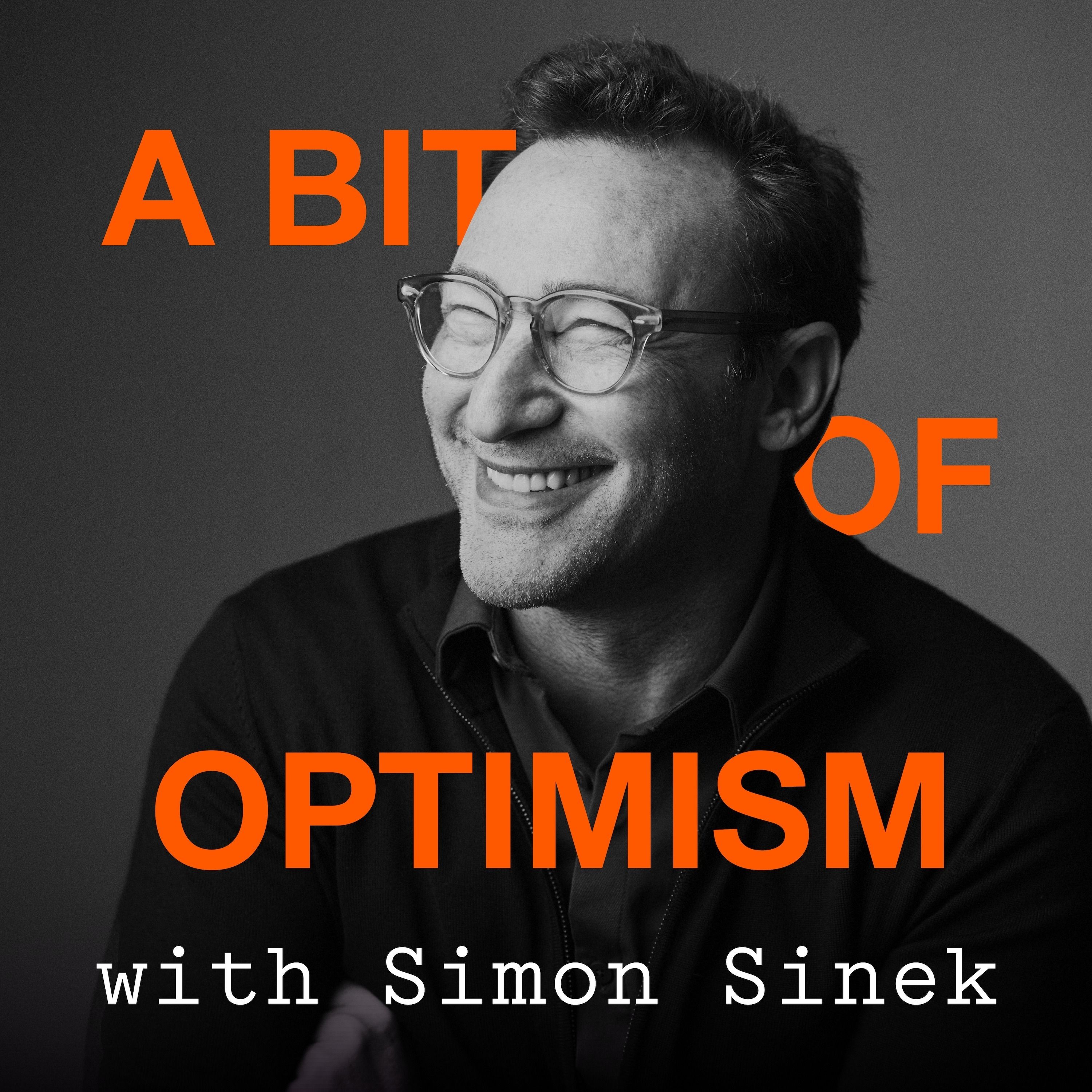
Revisited: Your Instincts Know What You Want with Happiness Expert Arthur Brooks
Summary
Simon Sinek and Arthur Brooks explore the neuroscience of happiness, arguing that meaning has cratered among young people due to technology’s removal of process. Brooks shares his journey from French horn player to Harvard professor, emphasizing that career reinvention requires embracing "80% excitement, 20% fear" and viewing setbacks as education. They discuss the "arrival fallacy" and the Stockdale Paradox, suggesting that focusing on daily process rather than distant outcomes fosters resilience and joy. The conversation concludes with a warning that AI and efficiency tools may erode the …
Topics discussed
Introduction: The neuroscience of 'why' and competing happiness theories
Arthur Brooks: Living the philosophy he teaches
Reinventing career: From French horn player to behavioral scientist
The difference between reapplying skills and true reinvention
The 80/20 rule: Excitement, fear, and deadness in decision making
The slingshot effect: Why going backward is necessary for progress
Reframing 'going backward' as education and gap years
The arrival fallacy: Why progress is sweet but arrival is not
Case study: Arthur's son and the value of delayed college
Lifequakes: Finding opportunity in forced transitions
Reframing discomfort as excitement and the pilgrimage metaphor
The power of process: Why the journey matters more than the outcome
Religious traditions and the concept of making process the point
Technology, AI, and the removal of process from daily life
The crisis of meaning for people under 35 and brain hemispheres
Defining meaning: Coherence, purpose, and significance
The Stockdale Paradox: Embracing process over hope for outcome
AI as a psychopath: The dangers of removing human process
Defining happiness: Enjoyment, satisfaction, and meaning
Cultivating curiosity and the role of environment vs. genetics
Learning styles, ADHD, and the flaws in traditional education
Personal proof: Success without a plan and finding your learning style
Conclusion: Finding joy in process and translating ancient wisdom
Listen ad-free on Castria